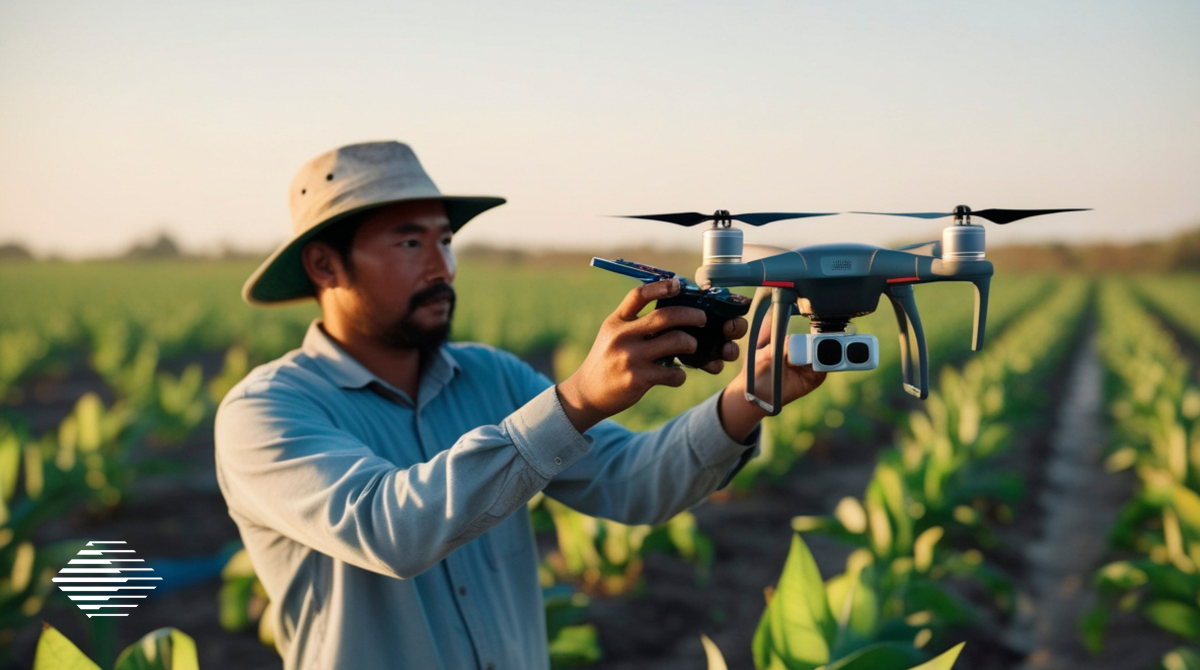
How Drones Are Transforming Agriculture - And Why Insurance Matters More Than Ever
Agriculture is evolving rapidly, and drones are one of the main drivers of this change. What once was a novelty - a fun way to take pictures of your fields - has now become a vital business tool. Today's drones can map fields, scout crops, apply chemicals, monitor livestock, and document storm damage in minutes instead of hours.
However, as drones shift from hobby devices to commercial equipment, the insurance requirements also change. Many farmers unintentionally create coverage gaps without realizing it.
Below is a clear and practical overview of what farmers need to know before flying a drone for business or farm purposes.
Why Drones are Becoming Essential in Agriculture
Farmers are adopting drones because they assist with:
- Crop scouting - detecting stress, disease, and nutrient issues early
- Acreage mapping - quick, accurate measurements for planting and insurance
- Livestock monitoring - checking remote pastures without wasting fuel
- Chemical application - targeted spraying and spreading with precision
- Storm documentation - fast aerial photos for claims and adjusters
These tools save time, cut labor, and enhance decision-making. But they also introduce new liability risks that traditional farm policies don't automatically cover.
The Three Key Types of Drone Insurance Every Farmer Should Know
When a drone is used for business or farm operations, it's no longer considered a hobby aircraft. That means you require specialized insurance, not just standard farm liability policy.
Here are the three main coverages every agricultural drone operator should consider.
Physical Damage Coverage (Hull Coverage)
This covers the drone itself - aircraft, batteries, sensors, cameras, and payload systems.
Why it's important:
- Drones in agriculture often cost $5,000-$40,000+
- They operate in high-risk environments: trees, power lines, wind, dust, chemicals
- A crash is more a question of when than if
Physical damage coverage pays for repairs or replacement, whether the damage results from pilot error, mechanical failure, or environmental factors.
Chemical Liability Coverage
This is crucial for spraying drone (spreading, seeding, or liquid application).
Chemical liability covers:
- Drift
- Misapplication
- Wrong chemical or incorrect rate
- Damage to neighboring crops
- Bodily injury or property damage caused by chemical exposure
Most standard farm policies exclude chemical drift from unmanned aircraft.
Most commercial general liability policies exclude aviation exposures altogether.
So, if a drone applies product incorrectly or drift damages a neighbor's crops, you need a specific chemical liability endorsement tied to drone operations.
General Liability (Aviation Liability)
This covers bodily injury or property damage caused directly by the drone - not the chemicals.
Examples:
- Drone hits a vehicle
- Drone injures a bystander
- Drone damages a roof during mapping
- Drone causes a fire by hitting power lines
Regular farm liability does not automatically extend to drones.
You need aviation-specific liability coverage to protect your farm.
Don't Forget: You Need FAA Part 137 for Spray Operations
If you're applying chemicals with a drone, you must have:
FAA Part 107
- Required for all commercial drone operations.
FAA Part 137
- Required for aerial applications including spraying, spreading, and seeding.
Operating a spray drone without Part 137 can:
- Void insurance coverage
- Lead to FAA fines
- Create legal liability if there's a drift claim
Insurance providers will ask for:
- Part 107 certificate
- Part 137 operating certificate
- Pilot training documents
- Maintenance logs
- Aircraft registration
If you spray without these, you're leaving yourself unprotected.
Why This Matters for Farmers
Drones are becoming as common as tractors, but the insurance industry hasn't fully caught up. Many farmers assume their farm policy covers drones - but most policies exclude:
- Aircraft liability
- Chemical drift
- Aviation operations
- Unmanned aerial systems
A single uncovered claim could cost tens of thousands of dollars.
A Simple Rule for Farmers
If the drone is used for anything related to the farm, treat it like farm equipment with aviation exposure, not a toy.